Common SEO Questions, Answered Simply
Top questions about building a well-optimized website and search engine optimization, answered simply. From keyword research and backlinks to page speed, AI search results, and more.
What is an SEO-friendly URL structure?
Use short, descriptive, lowercase URLs with hyphens instead of underscores, and avoid unnecessary parameters or numbers (e.g.
yoursite.com/seo-tips beats yoursite.com/page?id=42).How many keywords should I target per page?
Focus on one primary keyword and two to three supporting keywords per page. Over-optimising with too many keywords can dilute relevance and hurt rankings.
What is a good domain rating?
Domain Rating (DR) is scored 0–100. A DR of 30–50 is reasonable for small to mid-sized sites. Above 60 is strong, and above 80 is typically reserved for major publications and brands. New sites often start at 0–10.
How do I find keywords for my website?
Start by thinking like your audience, use tools like Google Search Console, our Keyword Generator, or Google's autocomplete to find what people actually search for in your niche.
What is the difference between on-page and off-page SEO?
On-page SEO covers everything you control on your site titles, content, meta descriptions, internal links and page speed. Off-page SEO refers to external signals, primarily backlinks from other websites that signal authority to search engines.
How long does SEO take to work?
Most sites see meaningful movement within 3–6 months of consistent effort, though newer sites can take 6–12 months to gain traction. SEO is a long-term investment, not a quick fix.
What is keyword difficulty?
Keyword difficulty estimates how hard it is to rank in the top 10 results for a given keyword, usually scored 0–100. It is based on the strength of pages already ranking high difficulty means well-established competitors you'll need to outperform.
What makes a good meta description?
A good meta description is 150–160 characters, includes your primary keyword naturally, and gives users a clear reason to click. While it doesn't directly affect rankings, it significantly impacts click-through rate from search results. Here is an example:
<meta name="description" content="Visit Whiskers Cafe, London's cosiest cat cafe. Enjoy great coffee surrounded by friendly rescue cats. Walk-ins welcome, booking recommended at weekends.">That example is 154 characters, includes the keyword "cat cafe", names the location, and gives a clear reason to visit.
What is a backlink and why does it matter?
A backlink is a link from another website pointing to yours. Search engines treat backlinks as votes of confidence the more high-quality, relevant backlinks you have, the more authoritative your site appears, which positively impacts rankings.
What is a sitemap and do I need one?
A sitemap is a file that lists all your important pages so search engines can find and index them faster it's especially important for large sites or ones with pages that aren't easily discovered through links.
How important is page speed for SEO?
Page speed is how fast your site loads. Google uses Core Web Vitals as a ranking signal, so slow pages get penalised and fast ones get a boost, especially on mobile.
What is a canonical tag?
A canonical tag tells search engines which version of a page is the "main" one, preventing duplicate content penalties when the same content is accessible via multiple URLs.
How important is mobile optimisation?
Extremely. Google uses mobile-first indexing, meaning it primarily uses the mobile version of your site for ranking, so a site that isn't mobile-friendly will rank significantly lower.
How do I get my website featured in Google AI Overview?
Google's AI Overviews pull content from pages it considers highly authoritative and relevant. 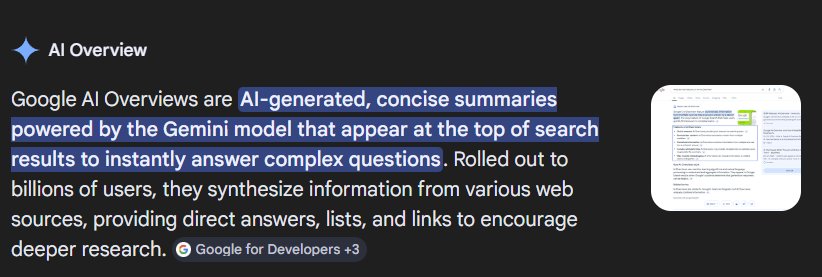 To improve your chances: write clear, direct answers to specific questions near the top of your page, use structured headings with the question as the heading and the answer immediately below, implement FAQ schema markup, ensure your site has strong E-E-A-T signals (Experience, Expertise, Authoritativeness, Trustworthiness), earn backlinks from reputable sources, and keep content factually accurate and up to date. Pages that already rank in the top 10 are far more likely to appear in AI Overviews. You can use SEOrobin's AI Overview Optimizer to check and improve your chances of being featured.
To improve your chances: write clear, direct answers to specific questions near the top of your page, use structured headings with the question as the heading and the answer immediately below, implement FAQ schema markup, ensure your site has strong E-E-A-T signals (Experience, Expertise, Authoritativeness, Trustworthiness), earn backlinks from reputable sources, and keep content factually accurate and up to date. Pages that already rank in the top 10 are far more likely to appear in AI Overviews. You can use SEOrobin's AI Overview Optimizer to check and improve your chances of being featured.How do I get my website to appear in ChatGPT and AI search results?
ChatGPT (via SearchGPT) and AI engines like Perplexity prioritise sources that are well-cited, authoritative and clearly structured. To maximise visibility: get mentioned and linked to by reputable sites in your niche, submit to Bing Webmaster Tools (ChatGPT uses Bing's index), make sure your robots.txt does not block GPTBot or PerplexityBot crawlers, publish original research others will reference, and keep content factual and well-written. This is the foundation of GEO (Generative Engine Optimisation) which rewards authority and clarity above all else. Unlike Google AI Overview which draws from top-ranked pages, ChatGPT and Perplexity rely more heavily on citations and external references.
What is schema markup and how do I add it to my website?
Schema markup is structured code added to your HTML that helps search engines understand what your content is about. It is written in JSON-LD format and placed inside a
<script type="application/ld+json"> tag in the <head> of your page. Common types include FAQ schema, Article schema, Product schema, and LocalBusiness schema. Adding it does not guarantee a rankings boost but it can unlock rich results in search listings, such as star ratings, FAQs, and event details, which increase visibility and click-through rates. Here is an example of FAQ schema markup:<script type="application/ld+json">
{
"@context": "https://schema.org",
"@type": "FAQPage",
"mainEntity": [{
"@type": "Question",
"name": "Your question here?",
"acceptedAnswer": {
"@type": "Answer",
"text": "Your answer here."
}
}]
}
</script>To get started, use Google's Structured Data Markup Helper to generate the code for your page type, paste it into the <head> of your HTML, and then test it with the Rich Results Test tool in Google Search Console.Why do some pages not get indexed by Google?
There are several reasons Google might skip a page. The most common are: the page is blocked by your
robots.txt file or a noindex meta tag, the content is thin or near-duplicate of another page, the page has no internal links pointing to it (making it hard for crawlers to find), it loads too slowly, or it was simply never crawled yet. You can check indexing status in Google Search Console under Coverage it will tell you exactly why each URL was excluded. Fixing a noindex tag or adding internal links from already-indexed pages are often the quickest wins.Want to put these answers to use? Try SEOrobin's free SEO tools.
Try SEOrobin Free